Key takeaways
- Three-season rooms are built for mild months and lighter insulation.
- Four-season rooms have insulated glass, roof and climate control.
- The comfort comes mostly from the glass, roof and conditioning.
- Some three-season rooms can be upgraded later.
What a three-season sunroom is
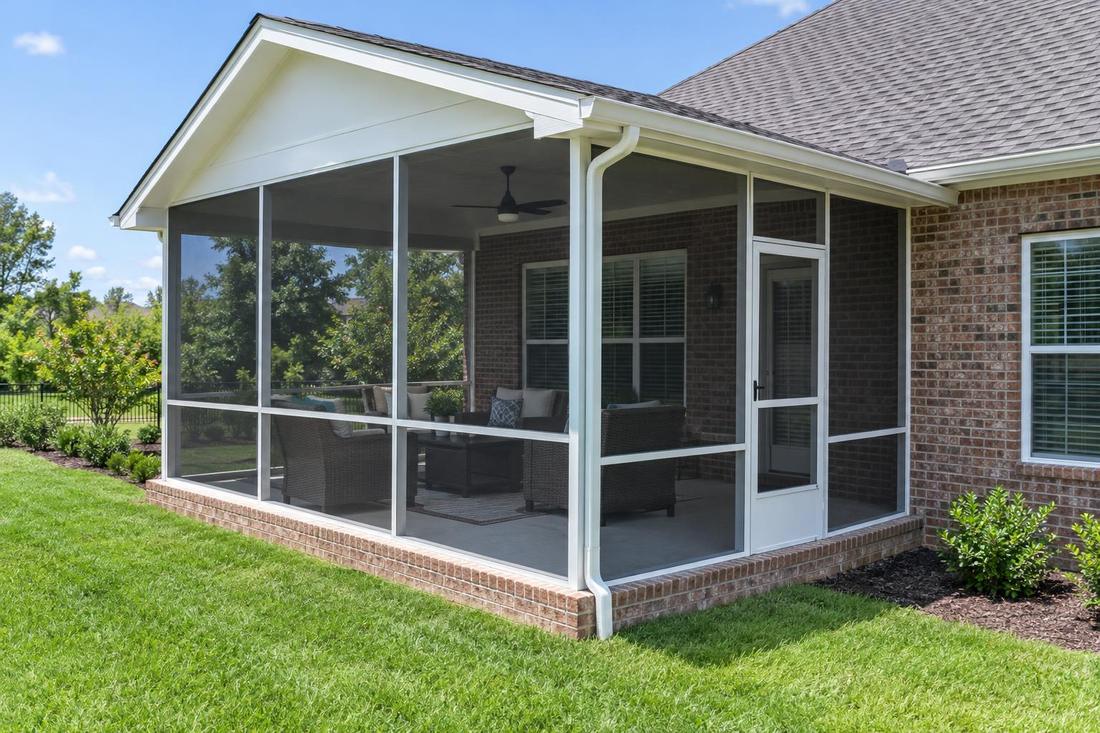
A three-season sunroom is built for spring, summer and fall. It has large windows, a solid roof and screens, but lighter insulation and no dedicated heating or cooling. On a cold winter morning it will feel chilly.
It is bright and breezy, and many people love it for exactly that.
What a four-season sunroom is
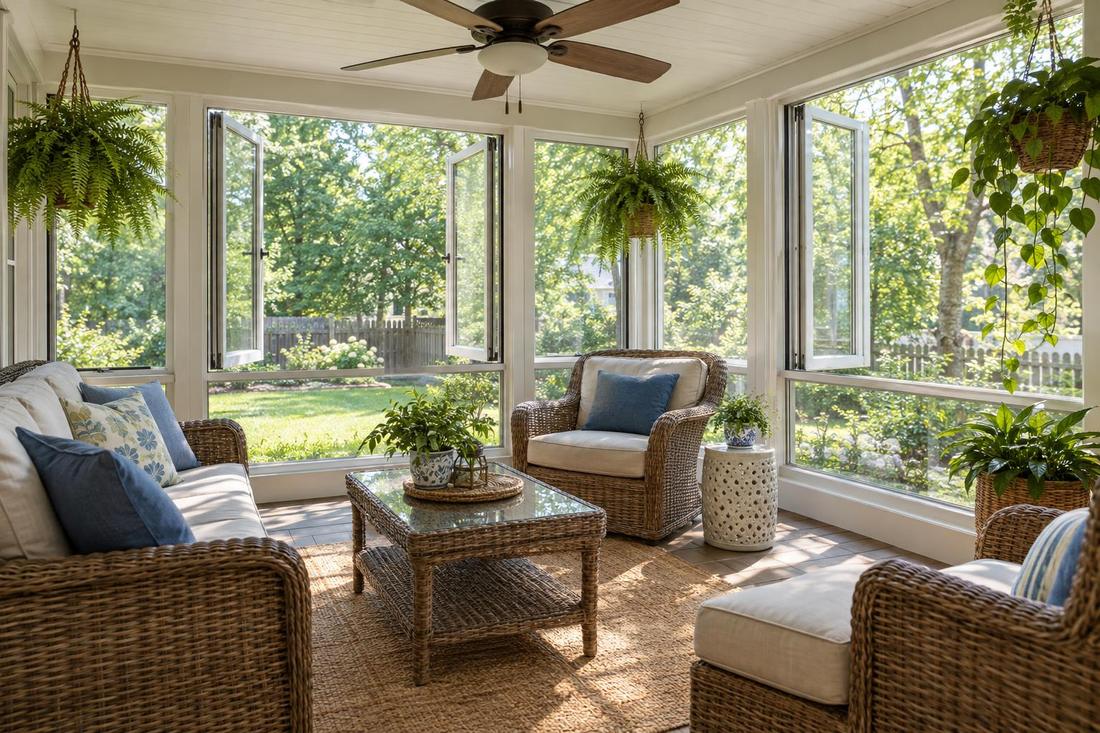
A four-season sunroom has insulated glass, an insulated roof and walls, tight seals and heating and cooling. It is built as a true room and can be used every day of the year.
The tradeoff is a more involved build and more systems to plan.
How to decide
Think about when you want to be in the room. If you picture coffee on a January morning, you want four-season. If you picture evenings in May and October, three-season may be plenty.
Also think about how the room connects to the house. A room that opens into your kitchen should feel like part of the house all year.
Upgrade paths
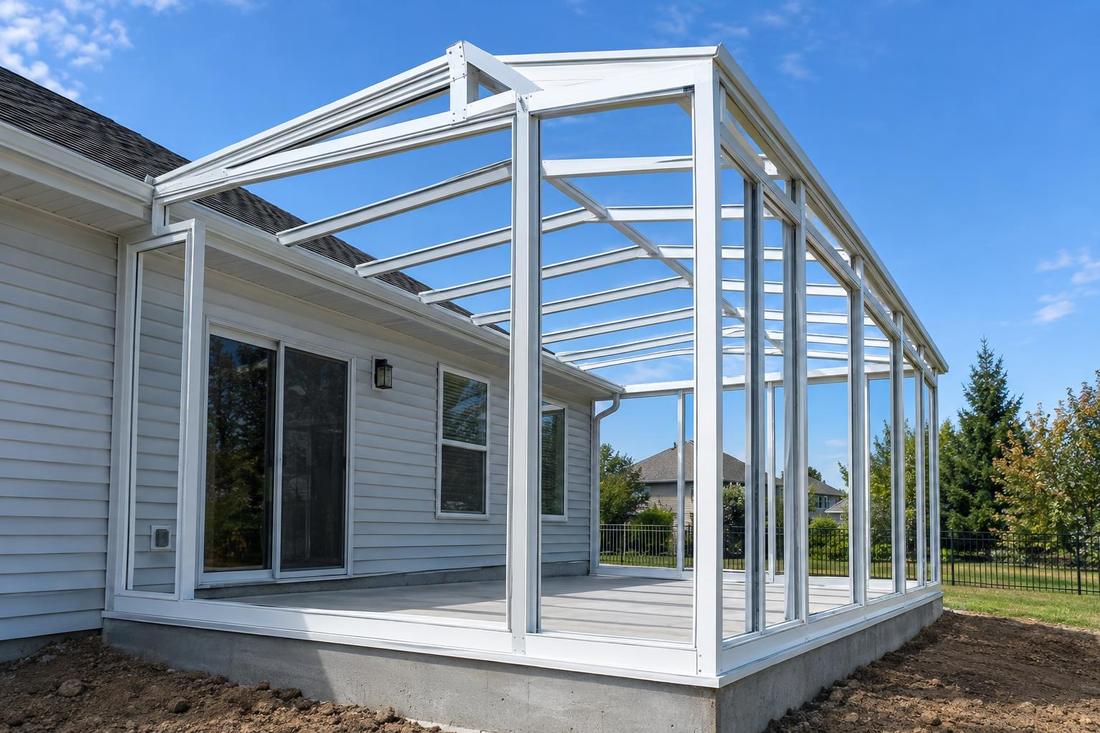
Some three-season rooms can be upgraded by changing glass, adding insulation and installing a mini-split. A site visit tells us whether the frame and roof will support the upgrade.
Planning for the upgrade early often saves rework.
Quick answers
Can a three-season room be used in winter?
On mild winter days with a small heater, yes, but it is not designed for cold weather.
Which is better for resale?
Four-season rooms count as living space more often, but local rules and appraisals vary.